
The Waiting Room Is Where the Patient Experience Begins
Waiting rooms provide a unique opportunity to turn idle time into undivided attention.
April 18, 2026 · Kellie Watt Executive Vice President, Waiting Room Subscription Services (WRSS) · Public Place

For many patients, the waiting room is where first impressions are formed.
After checking in at the front desk, patients take a seat in the waiting room and wait. Sometimes the wait is just a few minutes, and sometimes it’s longer. During this time patients may worry about…
Test results
Diagnoses
Upcoming procedures
Family concerns
Medical costs
Waiting rooms provide a unique opportunity to turn idle time into undivided attention.
Unlike social media feeds or television, magazines in waiting rooms provide alternative entertainment when…
People are seated with limited distractions
Mobile phone use may be limited or inconvenient
Patients are looking for something to occupy their attention
Reading is a quiet, accessible activity that many people naturally turn to when they have a few free minutes.
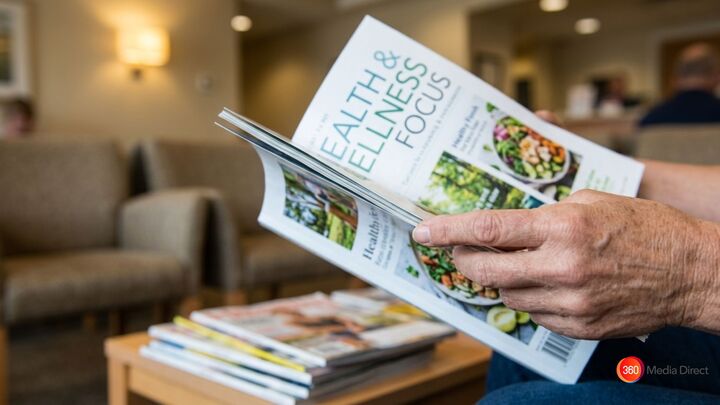
In this setting, where anxiety may peak, magazines provide eye-catching and easily accessible content that patients can browse casually or immerse themselves in longer articles.
When people become absorbed in an article or story, their attention shifts from immediate concerns to the articles and images in the magazines they are holding. Something engaging to read can help create a calmer atmosphere and experience. When attention is occupied, especially through reading, the wait feels shorter.
Recent research confirms that patients value waiting environments that are both calm and engaging, and that non-digital waiting-room content can meaningfully improve the patient experience.
A 2021 review in Global Advances in Health and Medicine concluded that waiting-room media can affect stress, mood, and overall patient experience. How patients engage their time while waiting can meaningfully influence comfort, satisfaction, and perceived quality of care.
A 2023 study in HERD: Health Environments Research & Design Journal found that patients’ perceptions of waiting rooms improve when the space offers elements that increase comfort, autonomy, and engagement during the wait.
A 2022 mixed-methods study in BMC Health Services Research found that the waiting experience is strongly shaped by how occupied patients feel during the wait. Participants consistently described waiting as more tolerable when there was something meaningful to engage with rather than simply sitting idle.
These recent findings support a practical point: patients do not simply want distraction—they value self-directed engagement that makes waiting feel shorter and less stressful. Print magazines fit that well because they are:
easy to pick up for a few minutes
less cognitively demanding than phone use
quieter and less socially isolating than scrolling
well-suited to short, fragmented waiting periods
WRSS is committed to placing magazines directly into the hands of patients in medical offices nationwide, while partnering with publishers to meaningfully expand their reach. By working closely with each publisher, we strategically target locations that connect their magazines with the audience most likely to engage with them.
Tags:Waiting Room Marketing, Patient Engagement, Healthcare Marketing, Audience Attention, Customer Experience, Content Marketing, Media Strategy, Magazine, Venues, Publishers
Related Posts
Waiting Room Advertising Still Works in a Distracted World

In Praise of the Local: Why Regional Magazines Matter
Regional magazines play an essential role in discovery, trust-building, and audience engagement.